
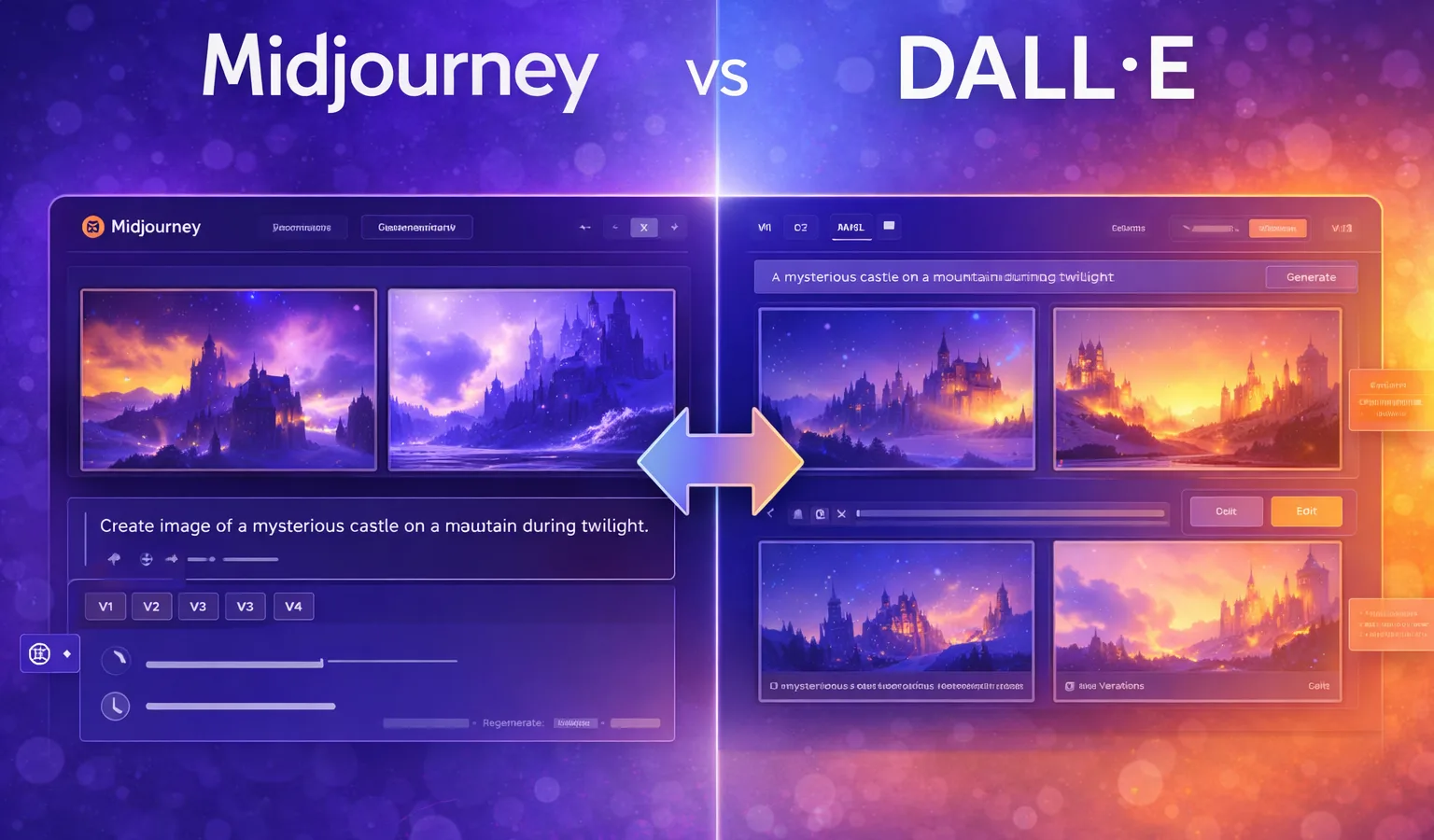
AI image generation has become one of the most competitive categories in AI. Two of the most recognizable names are Midjourney and DALL·E.
Both can generate impressive images from text prompts, but they are often used for slightly different kinds of work.
Midjourney is widely associated with highly stylized, visually dramatic outputs. DALL·E is often preferred when prompt-following, structured editing, and a cleaner product workflow matter more.
This guide compares them from a practical user perspective.
Quick verdict
If you want the short version:
- Choose Midjourney if you care most about aesthetics, mood, and striking visual output.
- Choose DALL·E if you care more about prompt adherence, controlled editing, and a smoother product workflow.
Overview
| Feature | Midjourney | DALL·E |
|---|---|---|
| Aesthetic quality | ⭐⭐⭐⭐⭐ | ⭐⭐⭐⭐ |
| Prompt adherence | ⭐⭐⭐⭐ | ⭐⭐⭐⭐⭐ |
| Editing workflow | ⭐⭐⭐ | ⭐⭐⭐⭐⭐ |
| Ease of use | ⭐⭐⭐ | ⭐⭐⭐⭐ |
| Creative experimentation | ⭐⭐⭐⭐⭐ | ⭐⭐⭐⭐ |
What Midjourney does best
Midjourney is often the strongest choice when image quality is judged by taste, atmosphere, and visual impact.
It is especially strong for:
- concept art
- moodboards
- fantasy and cinematic scenes
- highly stylized visual exploration
- visually rich thumbnails and brand experiments
The outputs often feel polished even when the prompt is not extremely detailed.
Strengths
- excellent visual taste
- strong stylization
- often produces “finished-looking” results quickly
- great for inspiration and direction finding
Weaknesses
- can be less predictable
- not always the easiest tool for fine-grained control
- workflow may feel less direct for users who want structured editing
What DALL·E does best
DALL·E tends to perform better when the goal is not just making something beautiful, but making something that follows the prompt closely and can be adjusted cleanly.
It is particularly useful for:
- product mockups
- layout-sensitive prompts
- structured visual ideation
- iterative edits
- content teams that need a smoother interface and more direct control
Strengths
- strong prompt adherence
- better fit for iterative editing workflows
- easier for many users to approach
- more practical for operational or content-heavy teams
Weaknesses
- may feel less “magical” or visually dramatic than Midjourney
- some outputs can feel cleaner but less emotionally distinctive
Best use cases for Midjourney
Midjourney is usually the better option if you are:
- making concept art
- generating mood-rich visuals
- exploring styles quickly
- creating standout social or editorial images
- prioritizing visual taste over strict control
Best use cases for DALL·E
DALL·E is usually the better option if you are:
- working from precise prompts
- iterating on visual direction
- editing or refining outputs in a structured workflow
- creating assets for content, product, or marketing teams
- prioritizing usability and predictability
Which one is better for content teams?
For editorial and content use, the answer depends on the goal.
Use Midjourney when you want:
- stronger artistic impact
- stylized covers
- visually distinctive creative assets
Use DALL·E when you want:
- clearer prompt-following
- practical iteration
- more predictable output for workflow-based use
A lot of teams end up using both:
- Midjourney for ideation and art direction
- DALL·E for execution and structured edits
Final verdict
There is no single winner for every image workflow.
- Midjourney is better for style, mood, and premium-looking visual output.
- DALL·E is better for clarity, control, and editing-friendly workflows.
If your question is “Which tool makes prettier images?” the answer is often Midjourney.
If your question is “Which tool fits better into a repeatable content workflow?” the answer is often DALL·E.